The Parking Lot Repair List to Walk Each Season
Look down, then at the edges, then up. A short walk once a season catches problems while they're still small.
October 17, 2026 · 4 min read
Parking lots rarely fail all at once. A hairline crack becomes a wider one. A faded stripe turns into a confusing stall layout. A car stop cracks in half and nobody replaces it. Each is cheap to fix when it first appears and more expensive after a season or two of neglect. The simplest defense is a regular walk with a list, done on foot, with a camera. Once a season is enough to catch most things early.
Start by looking down
Surface condition comes first, because it affects everything else on the list. Walk the drive lanes, the stalls and the areas around dumpsters, where heavy trucks put the most stress on the pavement. You're looking for:
- Cracks, especially ones that are widening or branching
- Potholes and depressions where water collects
- Raised or sunken sections of concrete near curbs, walks and drive approaches
- Oil staining that has soaked through the surface
- Areas where the surface is breaking down into loose material
Water is what turns small defects into large ones. Cracks let it under the surface, where it weakens the base and expands the damage. Mark what you find with photos and a note on location. Asphalt and concrete repairs are best done early, before the damaged area grows into a larger patch.
Seal coat and striping
Seal coat is a protective layer that helps pavement resist water, sun and fuel drips. Whether your lot is ready for it depends on the condition of the surface, and the order of work matters: clean the surface, make repairs, then seal, then stripe. Putting seal coat over cracks that haven't been addressed hides them for a few weeks and doesn't solve them.
Striping is the part customers actually read. Faded lines make stalls look wider than they are, confuse traffic through the lot and invite cars to park crooked. Fire lanes and accessible stalls need markings that are plainly visible, and the details of what's required are set by your jurisdiction, so confirm them locally rather than guessing. Because new striping is laid over fresh seal coat, plan the two together to avoid closing the same area twice.
Then look at the edges: curbs and car stops
Car stops take a beating. Cars strike them, plows and trucks drag them, and the anchors loosen over time. A cracked or shifted stop is more than a cosmetic issue, because it stops doing its job: protecting the sidewalk, the landscape bed, or the storefront behind the stall. It can also be a trip hazard for people walking between cars. Replace broken ones and check that the rest sit square and tight. Walk the curbs while you're there, since chipped or crumbling curbs often tell you where vehicles are cutting corners.
Finally, look up: signs
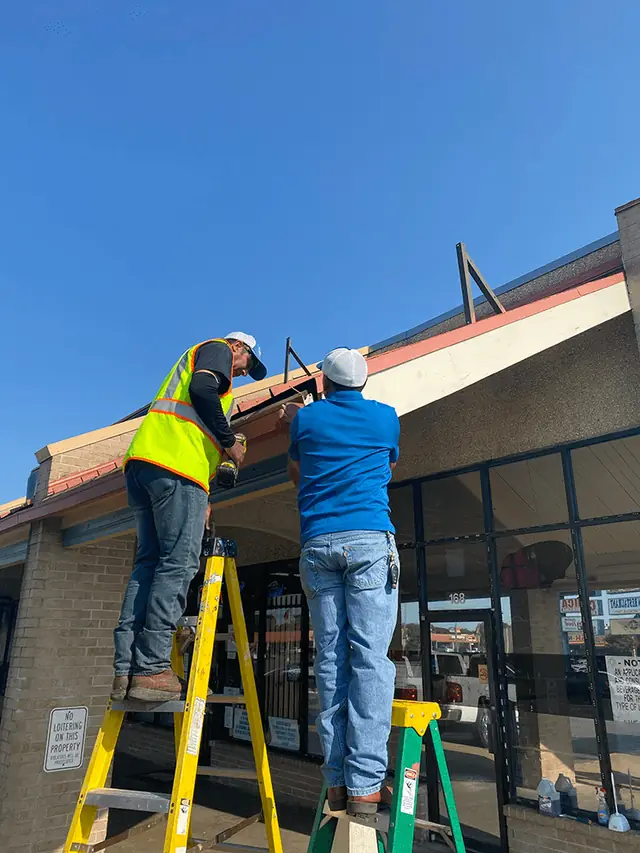
Lot signs are easy to overlook until one fails. Check stop signs, directional signs, accessible parking signs and tenant signs for fading, bends, loose hardware and posts that lean. A damaged sign makes the lot look neglected and can leave drivers unsure where to go. Replace them as they wear. And when a tenant leaves, don't forget the sign they leave behind: removing an old fascia sign promptly keeps a vacant space from looking abandoned, and makes it easier to show.
What about the buildings?
While you are out, glance at the storefront side too. Window glass with water spots and dust, peeling paint at trim and canopy edges, and stained exterior walls all shape first impressions as much as the pavement does. These items fit naturally into the same seasonal walk, and a single contractor can often cover them in one visit, which cuts down on scheduling for you and disruption for tenants.
Turning the walk into a plan
After the walk, sort what you found into three groups: fix now, schedule this season and watch. Safety items go in the first group: trip hazards, broken stops, damaged signs, deep holes. Surface and striping work that can wait a few weeks go in the second. Anything that looks borderline goes in the third, with a photo so that you can compare next season. Ask your contractor to walk the property with you once, so they can confirm which items belong where and sequence the work properly.
Sequencing is where the efficiency is. A lot that is swept, repaired, sealed and striped in the right order needs fewer closures and fewer repeat visits than one patched piecemeal. Phase the work so that part of the lot stays open for customers at all times, and tell tenants in advance which areas will be closed and when.
CenTex Maintenance Services handles seal coat and striping, car stop replacement, asphalt and concrete repairs, parking lot sign replacement and fascia sign removal for commercial properties across Austin, San Antonio, Houston and surrounding areas. Send your list through the online work order form, or call (512) 945-8480, Monday through Friday, 8am to 5pm.
CenTex Maintenance Services, (512) 945-8480
Call (512) 945-8480More articles
What a Porter Route Covers on a Retail Center
The small, repeated jobs on a porter route are the ones tenants and shoppers judge your property by.
How Often Should a Commercial Parking Lot Be Swept?
Set the sweeping frequency on purpose, based on what your property is actually dealing with.