What a Porter Route Covers on a Retail Center
The small, repeated jobs on a porter route are the ones tenants and shoppers judge your property by.
October 17, 2026 · 4 min read
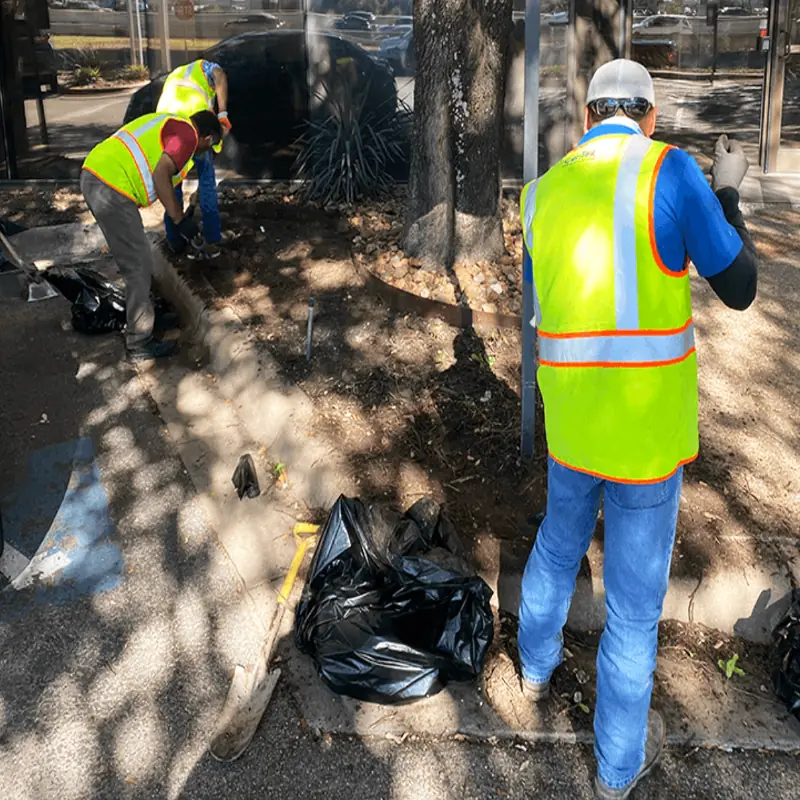
Most property managers picture a porter as someone walking the lot with a grabber and a trash bag. That picture is accurate as far as it goes, but a route built around it misses most of what tenants and shoppers actually notice. On a retail center, a porter route is a repeating loop of small jobs, and the loop is what you are paying for, not any single stop on it.
What belongs on the route
A good route is written down. It lists every stop, in order, so the person walking it today does the same job the person walking it last week did. Whoever is on the property, the result should look the same. For a retail center, the core list looks like this:
- Changing trash liners in site receptacles, so no can sits overflowing at a tenant's front door
- Wiping down site furniture such as benches and outdoor tables that collect dust, bird droppings and sticky spills
- Removing trash from landscape areas, including the bags and wrappers that blow into beds and tree wells
- Returning shopping carts to the stores they belong to
- Pulling bandit signs from medians, corners and pole bases
- Cleaning dumpster enclosures
That list matches the porter services CenTex Maintenance Services runs for commercial properties in Austin, San Antonio and Houston. Each item looks minor on its own. Together they decide whether the center looks cared for or neglected.
Why carts matter more than they look like they should
Stray shopping carts are one of the first things a visitor reads as disorder. A cart parked in a space takes a spot a customer could use. A cart drifting across a drive aisle is a dent waiting to happen on somebody's car. Carts left at the far edge of the lot also tend to wander off the property entirely, which becomes a problem for the grocery tenant and then a phone call to you. When the porter returns carts on every pass, they stay where the store expects them, and the stalls near the doors stay open at the busiest hours.
Bandit signs and who they reflect on
Bandit signs are the small corrugated signs staked into medians and zip-tied to poles, advertising everything from roof repair to quick cash for houses. Usually none of your tenants put them there, but every tenant ends up looking at them. Left alone, they multiply, because the next advertiser reads the first sign as proof that nobody checks. Pulling them on each route pass breaks that pattern. It also keeps your entrance looking like a property someone is watching, which is the impression you want a prospective tenant to get when they drive in for a showing.
Dumpster enclosures: the part tenants smell before they see
Enclosures get ignored until a restaurant tenant or a neighbor complains. Overflow bags, liquid on the pad and a gate left hanging open show up fast, and they draw pests and invite more dumping. Cleaning out the enclosure on a regular rhythm is far easier than dealing with the complaint after the fact. If the walls and pad are already grimy, that is a pressure washing job, and it pairs well with a porter route because the porter is the one who sees the problem first.
What the porter sees that nobody else does
A porter covers the property on foot, at walking speed, every visit. That makes the porter the best early warning system you have. A leaning sign post, a gate latch that no longer catches, a light pole with a cracked base, a corner of the lot where somebody keeps leaving furniture: these show up on foot long before they show up on an inspection report. Ask your contractor to pass along what they notice, and treat those notes as free information about the property.
How do you know the route is working?
Walk the center yourself, at a time you didn't announce. Start at the main entrance and look the way a first-time customer would. Check the receptacles, the landscape beds, the cart corrals and the enclosure gates. If you find something the route should have caught, either the list needs another line or the frequency needs to go up. A route is a living document. Retail centers change: a new restaurant opens, a tenant starts taking more deliveries, a construction site next door starts shedding debris. The schedule should respond to that.
Matching frequency to the property
There isn't one right frequency. A center with a busy grocery anchor and two restaurants needs more passes than a quiet strip with office tenants. Weekends and holiday weeks usually bring more litter and more loose carts. Ask your contractor to describe what a visit covers and how long it takes, then compare that to what you see on site. CenTex offers maintenance plans on a one-time or regular-schedule basis, so you can start with a single pass and set a standing schedule once you know what the property needs.
If your center needs a porter route, or a second look at the one it has, see the Porter Services page and send a request through the online work order form. The office at 5214 Burleson Rd, Suite 403 in Austin is open Monday through Friday, 8am to 5pm, and the team is at (512) 945-8480.
CenTex Maintenance Services, (512) 945-8480
Call (512) 945-8480More articles
How Often Should a Commercial Parking Lot Be Swept?
Set the sweeping frequency on purpose, based on what your property is actually dealing with.
What Changes When Drive-Thrus, Sidewalks and Dumpster Pads Get Washed
Sweeping removes what sits on top. Washing removes what has soaked in, and that is the difference tenants see.